Practical Skills
Learning processes, using tools and materials, following steps and completing purposeful tasks with increasing competence.


Announcement: V-Excel is now officially registered on the NSE Social Stock Exchange (SSE), effective 14 May 2026.
VIEW OUR BROCHURE
For young adults whose support needs make mainstream
employment difficult, meaningful adulthood requires
a different pathway—not fewer possibilities.
At V-Excel's Vocational Training Unit, structured
vocational activity becomes a way to develop practical
abilities, greater independence, confidence and
participation in everyday life.
Training is shaped around each person's strengths,
capabilities and support needs, creating opportunities
to learn, contribute and belong.
An initiative of V-Excel Educational Trust
in association with Esvi Sarada Foundation.
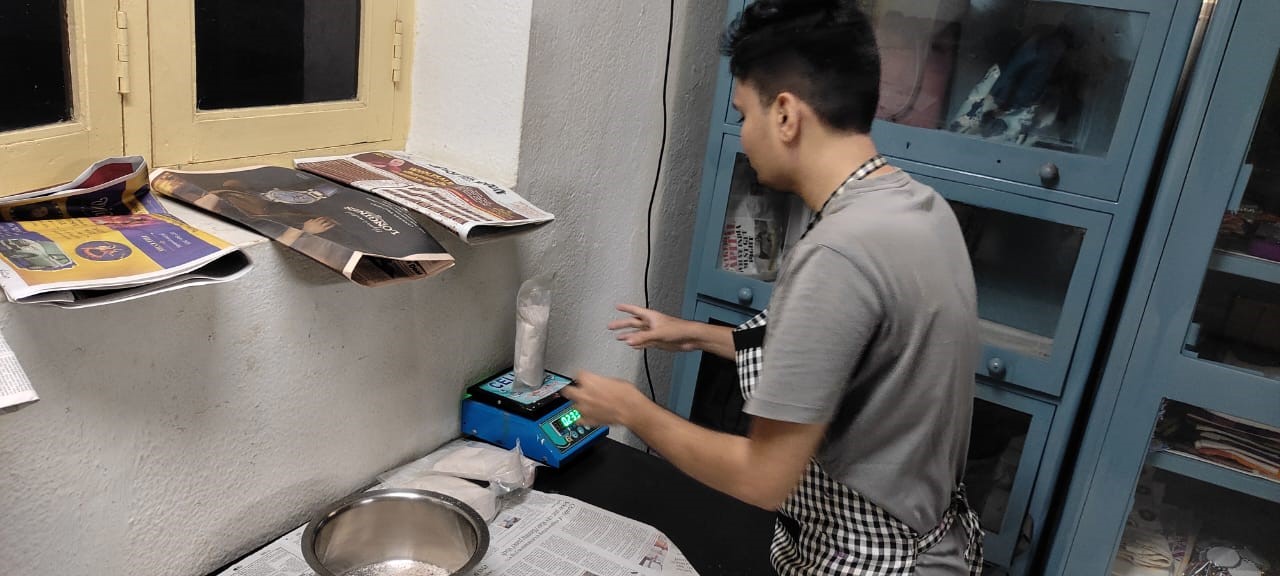
For some young adults with intellectual and developmental disabilities, the demands of mainstream employment may not align with their individual strengths or support needs.
That does not diminish their capacity to learn, participate, create or contribute.
VTU provides a structured and supportive environment in which each trainee can develop at an appropriate pace. Through purposeful activity, functional learning and vocational experiences, young adults build skills that matter not only in work-related settings, but in everyday life.
Success may look different for every trainee. The goal is greater capability, confidence, participation and dignity.
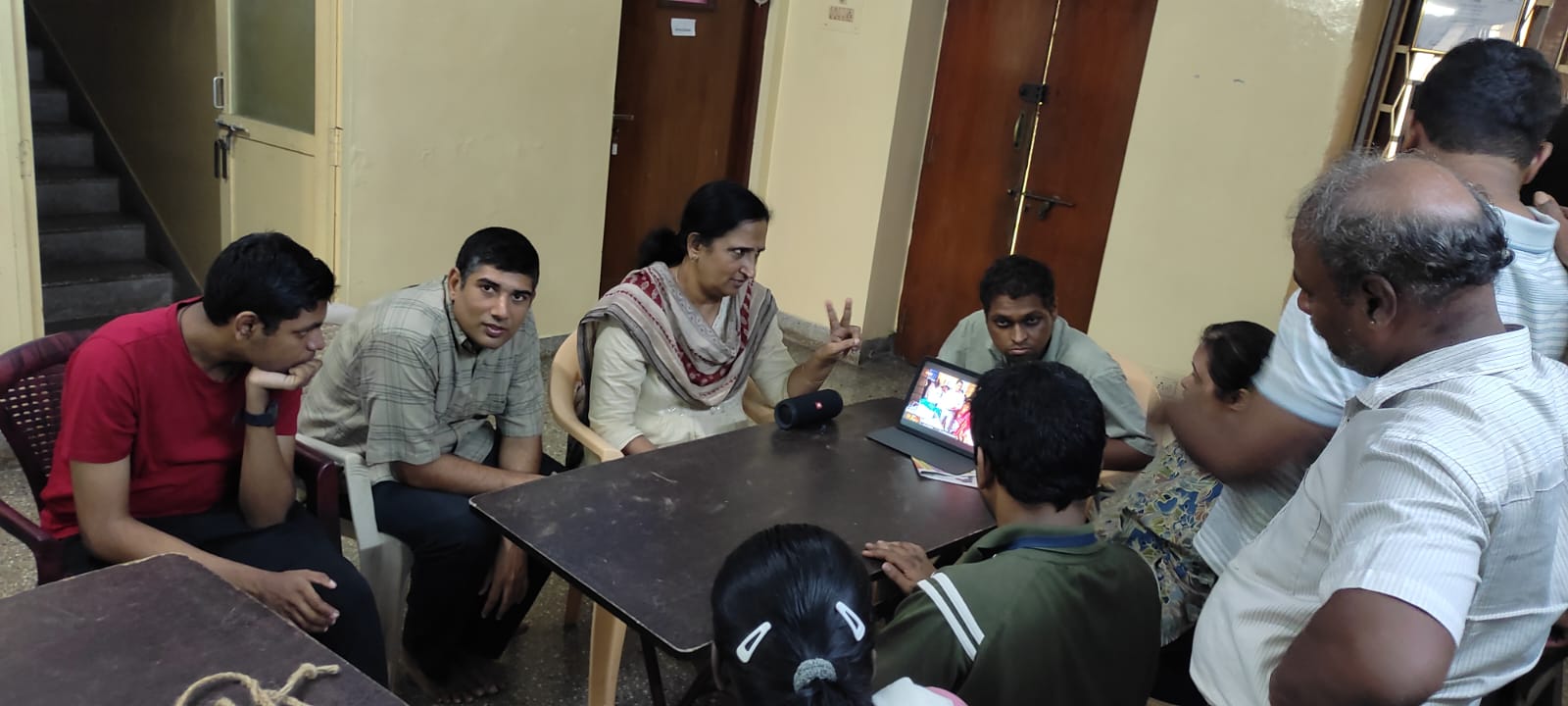
At VTU, vocational activity is not simply about learning to make or produce something. Each task becomes an opportunity to practise skills that support greater independence, participation and confidence in everyday life.
Through repetition, guidance and hands-on experience, trainees learn at their own pace and experience the satisfaction of doing more for themselves.
Learning processes, using tools and materials, following steps and completing purposeful tasks with increasing competence.
Strengthening everyday abilities, functional academics, money skills and other competencies that support greater self-reliance.
Expressing needs, making choices, interacting with others and learning to participate within a shared working environment.
Following routines, taking ownership of tasks, experiencing achievement and recognising one's own growing capabilities.
Every trainee brings a different combination of interests, abilities and support needs. At VTU, vocational experiences are chosen and adapted to help individuals discover activities they enjoy, practise skills they can build upon and find meaningful ways to participate.
Training may take different forms for different trainees—and can evolve as confidence, competence and interests develop.
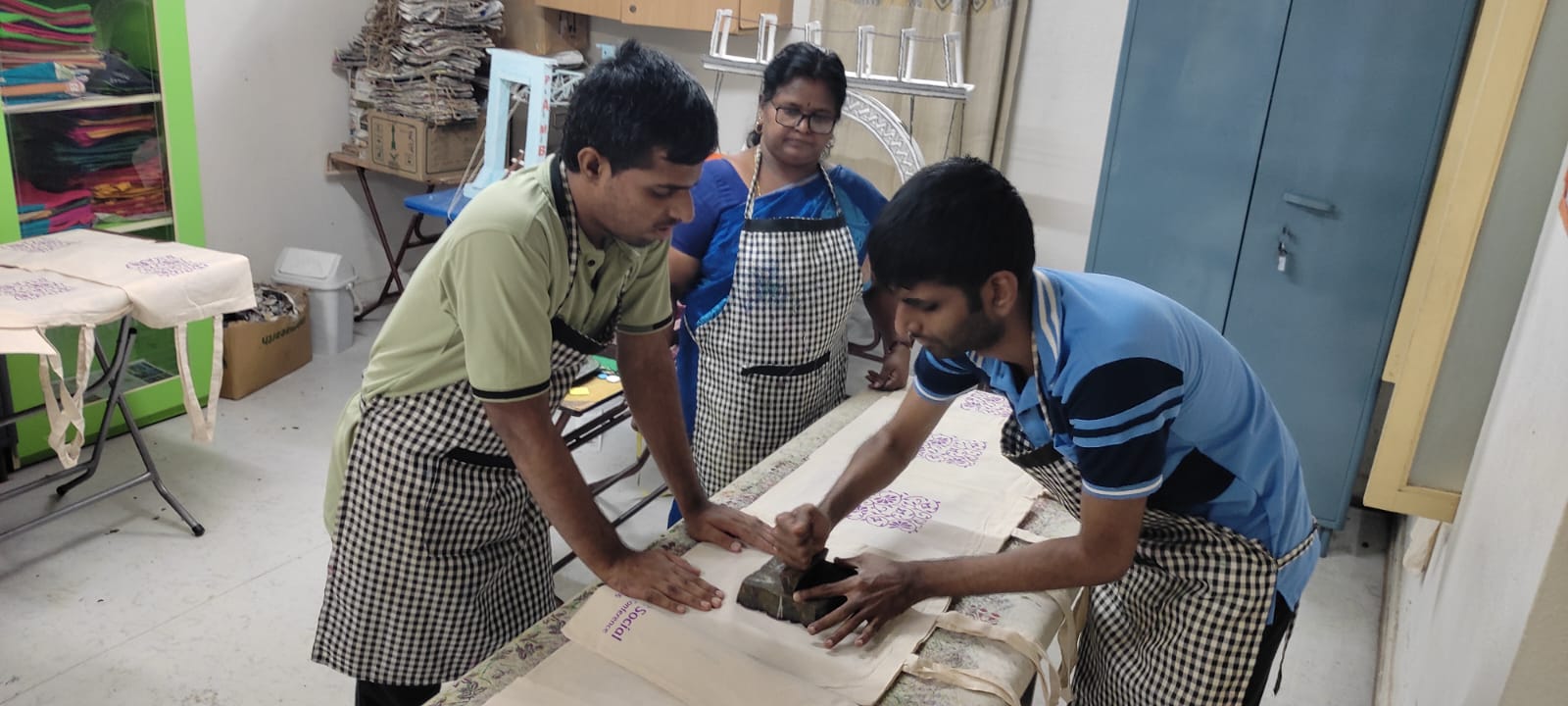
Preparation, measuring, sequencing and working safely with food.
Developing coordination, accuracy and practical sewing skills.
Building focus, coordination and creativity through structured processes.
Creating useful products through repeated steps and careful finishing.
Developing functional digital skills through guided computer-based activities.
Practising communication, routine responsibilities and interaction with others.
Learning photocopying and other practical office-related tasks.
Using creativity and fine-motor skills to make purposeful products.
At VTU, learning extends beyond structured vocational activities. Trainees have opportunities to participate in real environments where their effort contributes to something tangible and valued.
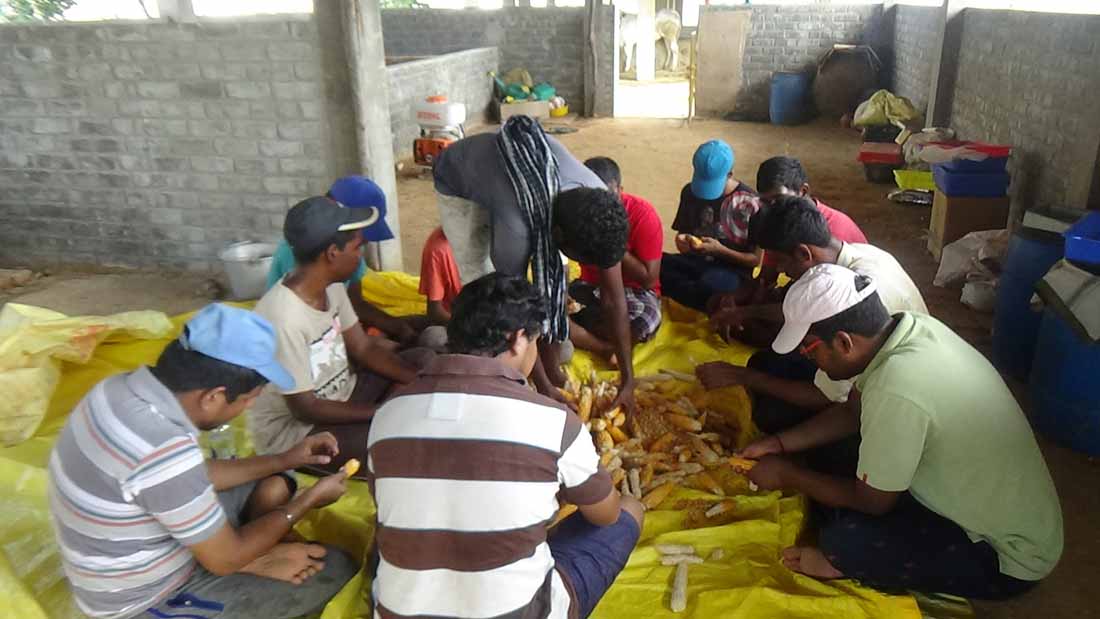
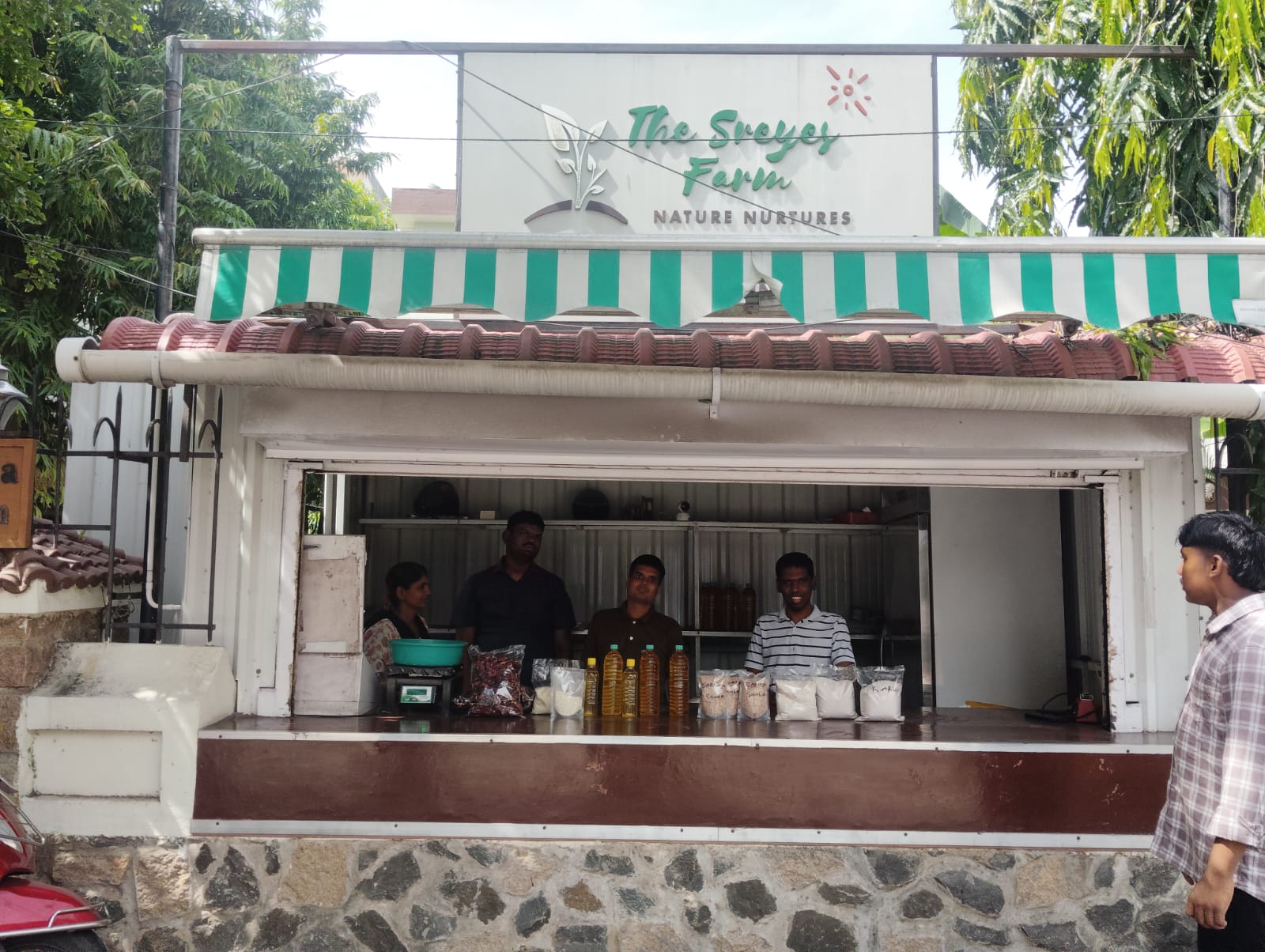
On a rotational basis, trainees spend time at Sreyes Farm, an initiative of Esvi Sarada Foundation, where they participate in tending vegetables, fruits, grains and other produce.
Working on the farm brings together physical activity, routine, responsibility, teamwork and the experience of caring for something over time.
The connection continues through VTU's product outlet, where products created through vocational activities are sold alongside produce from the farm. Farm produce suitable for sale reaches customers; the remainder is shared with the community.
Their effort becomes part of a cycle of growing, creating, sharing and contributing.
Tending crops, following routines and sharing responsibility for something that develops over time.
Using vocational skills to create products with purpose, care and increasing competence.
Products and farm produce move beyond the programme through sale or through sharing with others in the community.
At VTU, success is not measured against a single outcome. Every trainee has different strengths, support needs, circumstances and possibilities for adult life.
For one person, progress may mean completing a task with less assistance. For another, it may mean communicating a choice, taking responsibility for a routine, contributing to the making of a product or participating more confidently alongside others.
Some trainees may move into residential or supported settings where they continue to participate in vocational, agricultural, creative and everyday activities. The skills, routines and confidence developed at VTU can help prepare them for that transition and for continued participation in adult life.
Doing more for oneself, with the level of support appropriate to the individual.
Having meaningful routines, tasks and responsibilities that give structure and purpose to adult life.
Taking part in shared activities, relationships and community life rather than remaining on the margins.
Carrying skills, routines and meaningful activity into home, supported or residential settings and other environments in adult life.
The destination may differ. The opportunity to live a purposeful and participating adult life should not.
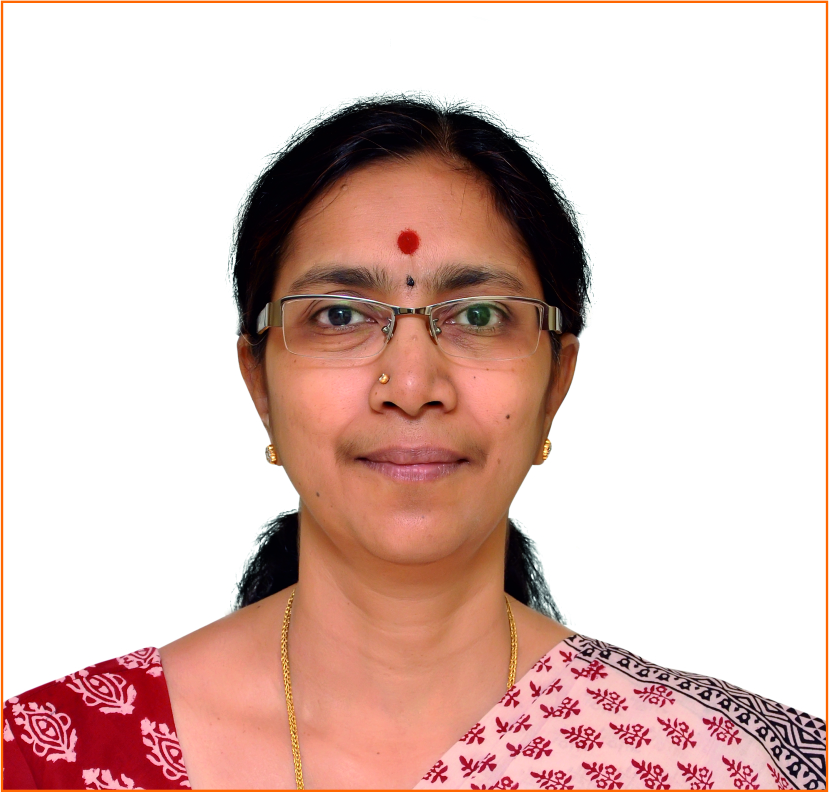
VTU's team works closely with trainees to understand their strengths, support needs and developing interests, adapting activities and expectations as each individual progresses at their own pace.
![[Name of team member]](/images/programs/vikasith/mani.jpg)
If you would like to explore whether VTU may be an appropriate programme for your young adult, our team would be glad to understand their strengths, support needs and aspirations, and discuss the possibilities with you.
Talk to Our Team